
Poly-B Pipes: What BC Homeowners Should Know
Grey plastic pipe stamped PB2110, in homes built 1978 to 1995. Here's how to identify it, why insurers care, and what a repipe actually involves.
What is Poly-B pipe?
Poly-B is grey plastic supply pipe that builders installed across Canada roughly between 1978 and 1995. It was cheap, easy to work with, and seemed fine for decades. Then the failures started: brittle fittings, chlorine degradation, and slow leaks inside walls and ceilings.
If your house was built in that window, there's a good chance you have it. You don't need to panic, but you do need to know what's in your walls, because insurers and home buyers are asking the same question.
The scale is bigger than most people expect: Poly-B went into more than 200,000 BC homes built between 1978 and 1995. The pipe is grey plastic, usually stamped PB2110 or CSA-B 137.8 along its length. It degrades from the inside out, the plastic is sensitive to chlorine in municipal water, turns brittle, and tends to fail suddenly at the fittings, behind walls and ceilings.
How do I know if my house has Poly-B?
Look for grey plastic pipe, usually stamped PB2110 along its length. Check near the water heater, under sinks, or wherever the supply lines are exposed in the basement. It looks like nothing else in a plumbing system, grey and plastic where you'd expect copper.
Not sure? That's the easiest plumbing question in the world to answer remotely. Text a photo of the pipe to Jeff at (604) 306-7951 and he'll tell you what you're looking at. The Poly-B replacement page covers the full swap process.
Why do insurers care about Poly-B?
Because a Poly-B failure isn't a drip, it's a claim. A supply line that lets go inside a wall or above a ceiling damages finishes, flooring, and whatever sits below it. Some insurers now ask about Poly-B before renewing coverage, and some charge for it or require an inspection.
Homeowners across the Fraser Valley are repiping before it becomes an insurance problem rather than after. One Langley customer had Poly-B through the whole house and wanted it gone before renewal season. Read how that whole-house repipe went, including how nearly all the drywall was saved.
Insurers are blunt about it: expect higher premiums, large water damage deductibles, excluded water coverage, or refusal to renew until the house is repiped in PEX or copper. A full repipe in BC typically runs $6,000 to $15,000 depending on house size and how much drywall restoration it needs. The industry's position has history behind it: the US class action Cox v. Shell Oil ended in a settlement of roughly a billion dollars, most of it paid out for re-plumbing homes.
Copper or PEX: what replaces Poly-B?
Both work. Copper has the track record and the rigidity; PEX is flexible, faster to run, and resists freezing better. Most repipes use PEX for the branch lines with copper where the system needs it, and a proper repipe includes new shutoffs and access panels so the next plumber isn't opening walls.
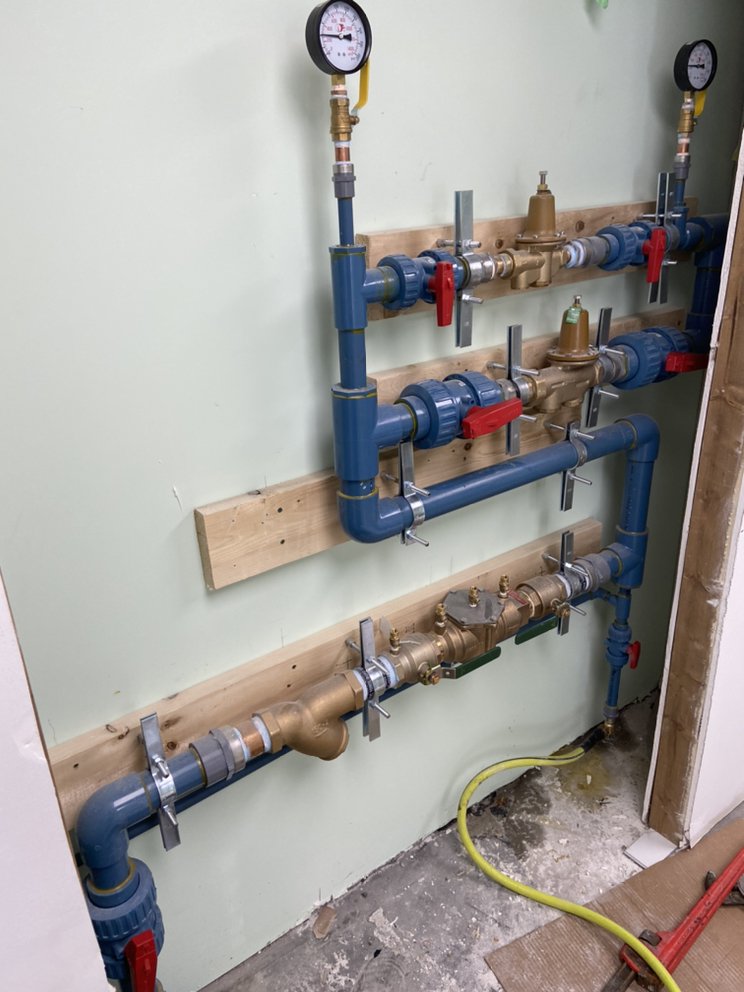
The material matters less than the installer. A tidy manifold, supported runs, and labeled lines are what separate a repipe from a mess.
What does a repipe look like day to day?
It's less dramatic than people fear. The water is off for chunks of the working day, walls get opened where lines run, and the plumber works room by room so you keep at least one working bathroom most of the time. Drywall patches are part of the job.
Jeff schedules repipes around the household, and the quote covers the whole job before it starts. Find your city on the repipe map, or read about renovation plumbing if you're opening walls anyway.
Sources and further reading.
The rules and facts in this article come from the official sources below. When in doubt, your municipality's building department has the final word.
- Insurance Bureau of Canada — the industry body whose members price Poly-B risk
- Township of Langley permits — repiping permits in Langley, where Jeff's whole-house Poly-B case study happened
- BC Building Codes and Standards (Gov BC) — the code a repipe has to meet

Jeff Wood
Jeff Wood started plumbing in 2004 and earned his Red Seal in 2009. He worked for established companies in the Fraser Valley before starting Jeff's Plumbing in 2012.
Red Seal Certified Plumber #00110-PL10, 2009 · Licensed, insured, WorkSafeBC covered, bondable · In the trade since 2004 · BBB A+ rating · jeffsplumbingbc@gmail.com· About Jeff's Plumbing