
How Long Does a Hot Water Tank Last?
Eight to twelve years is the honest answer for most BC homes. Here's how to tell where yours is in its life, and when repair stops making sense.
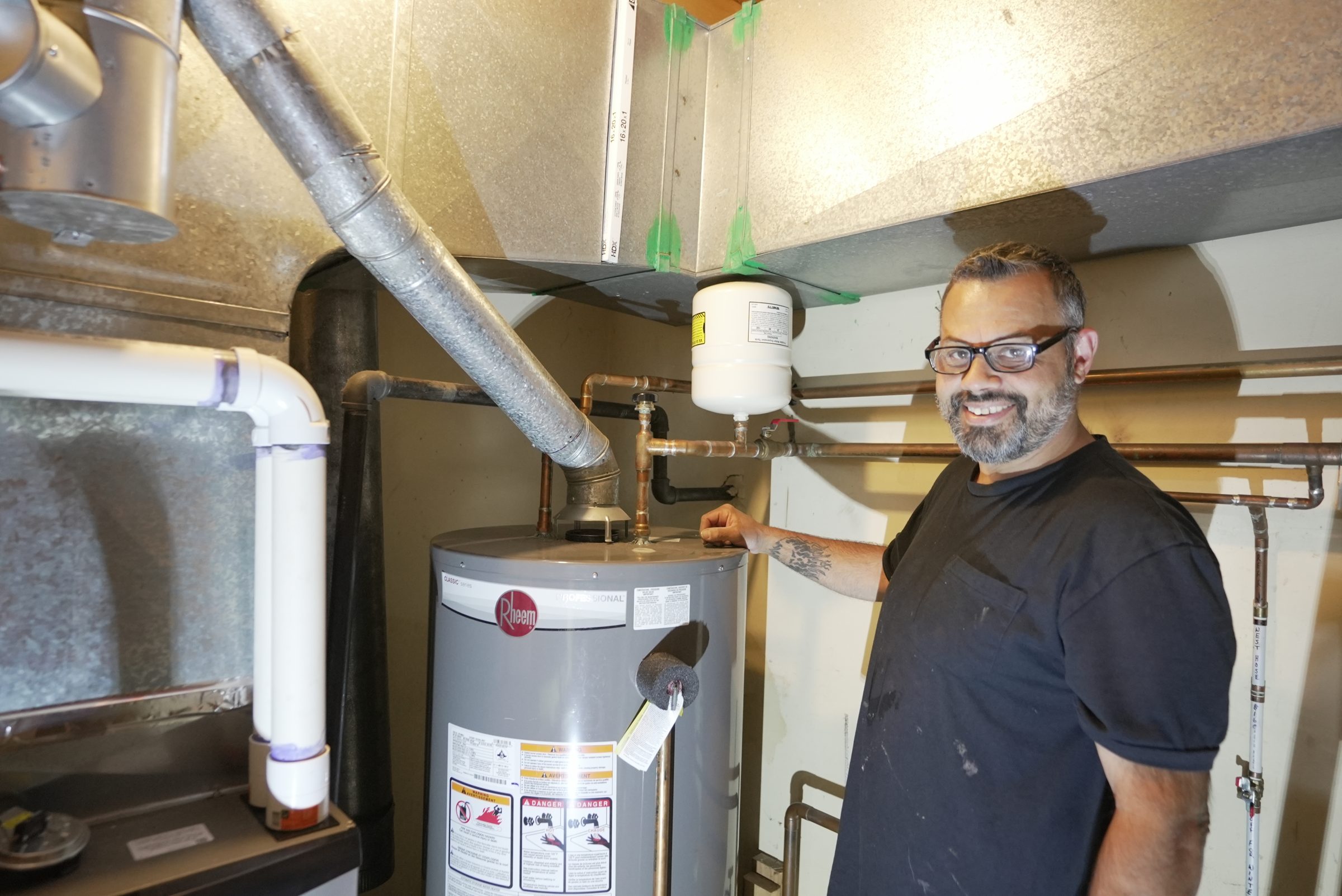
How long does a hot water tank last, honestly?
Eight to twelve years is typical for a hot water tank in British Columbia. That's not a marketing number, it's what plumbers see in the field. Tanks in Abbotsford and the Fraser Valley sit in basements and utility closets where hard water and mineral buildup work on them year after year.
A tank that's been serviced, kept at a reasonable temperature, and protected by an expansion tank can stretch past that range. A neglected one can leak at seven. If yours is older than ten and acting up, the rest of this article will help you decide what to do about it.
What actually fails inside a hot water tank?
Most tank trouble comes from three parts, and all three are repairable: the element, the thermostat, and the pressure relief valve. If the water goes cold or lukewarm on a tank under ten years old, it's usually one of these, and a repair buys you more time.
What isn't repairable is the tank body itself. Once the steel rusts through and water seeps from the seam or the base, the tank is done. That's the difference between a service call and a replacement, and it's the first thing a plumber checks.
Should you repair or replace your tank?
The rule of thumb is simple. Element, thermostat, or valve on a younger tank: repair it. A leak from the tank body, or a tank past its tenth birthday: replace it. Pouring repair money into a tank that's about to leak somewhere else doesn't make sense.
There's a timing angle too. If you're renovating a bathroom or adding a suite, that's the moment to size the tank to the house you're going to have, not the one you had. Read more about hot water tank replacement and installation or find your city's page for same-day swaps.
How do you size a replacement tank?
Most two to three bathroom homes run a 40 or 50 gallon tank. A basement suite, a big family, or two showers running at once changes the math. The right tank is sized to the household, not to what the builder happened to install.
When Jeff quotes a replacement, he sizes the new tank to the house and the people in it. The old tank's size is a starting point, not the answer.
Can a hot water tank be replaced the same day?
Usually, yes. Jeff carries common sizes and does same-day swaps for most calls that come in during the morning, Monday to Saturday. The old tank gets hauled away as part of the job.
Some installations need a plumbing permit depending on the municipality. Jeff tells you up front when that applies and handles the paperwork. Check the drain cleaning page if your real problem is a shower that's hot but slow.
One rule that surprises people: in BC, a tank has to be strapped to the structure in high-seismic areas under the BC Building Code (Sentence 9.31.6.2.(3)), two straps, anchored into studs or concrete, upper and lower thirds of the tank. Burnaby, Port Moody, and Port Coquitlam also require a plumbing permit for any water heater replacement, no like-for-like exemption, partly so an inspector can verify that strapping. Jeff files the permits and straps every tank to code.
Sources and further reading.
The rules and facts in this article come from the official sources below. When in doubt, your municipality's building department has the final word.
- BC Building Codes and Standards (Gov BC) — where the seismic strapping rule in Sentence 9.31.6.2.(3) lives
- Technical Safety BC — regulates gas-fired water heater work in BC
- City of Abbotsford building permits — the permit portal Jeff files through in Abbotsford
- City of Burnaby — an example of a city with no like-for-like tank swap exemption

Jeff Wood
Jeff Wood started plumbing in 2004 and earned his Red Seal in 2009. He worked for established companies in the Fraser Valley before starting Jeff's Plumbing in 2012.
Red Seal Certified Plumber #00110-PL10, 2009 · Licensed, insured, WorkSafeBC covered, bondable · In the trade since 2004 · BBB A+ rating · jeffsplumbingbc@gmail.com· About Jeff's Plumbing